Introduction to Military Calisthenics
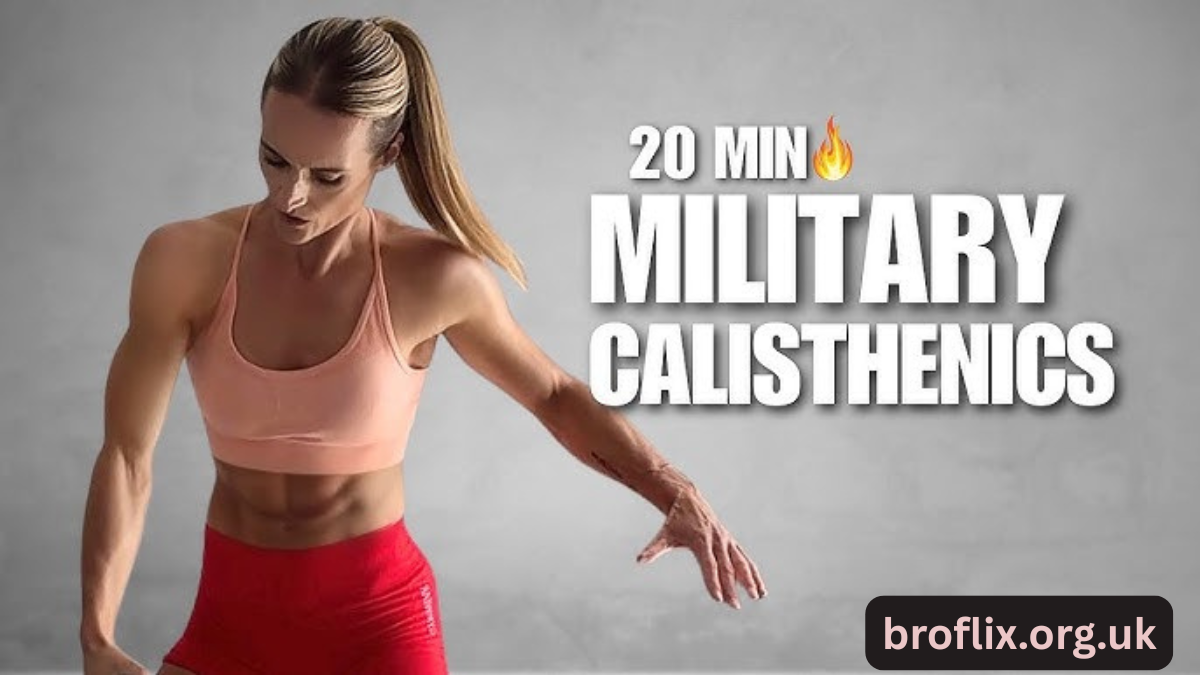
Military calisthenics refers to a structured form of bodyweight training that builds strength, endurance, discipline, and functional fitness without relying on gym machines or external weights. It is widely used in armed forces training programs because it develops a soldier’s ability to move efficiently under physical stress while maintaining control over their own body. The idea is simple but powerful: if you can master your own body, you can handle most physical challenges thrown at you in real-world environments.
Unlike traditional gym-based workouts that isolate muscle groups, military calisthenics focuses on full-body engagement. Exercises like push-ups, pull-ups, squats, planks, and burpees are performed in high-repetition sets or structured circuits. This approach builds not only muscle strength but also cardiovascular endurance and mental resilience. The intensity can be adjusted easily, making it suitable for beginners and advanced trainees alike.
Another defining feature of military calisthenics is its emphasis on discipline and consistency. Training is often performed in group settings, with strict pacing, counting, and synchronization. This creates a sense of unity while also pushing individuals to perform beyond their perceived limits. Over time, this structured repetition builds both physical toughness and psychological endurance.
Military calisthenics is also highly adaptable. It can be performed in nearly any environment—fields, barracks, parks, or even small indoor spaces. This makes it especially valuable for military personnel who may not always have access to full training facilities. The lack of equipment requirement removes barriers and encourages constant readiness.
What makes this training style particularly effective is its focus on natural movement patterns. Instead of artificial machines, it uses movements the human body was designed to perform—pushing, pulling, squatting, lunging, and stabilizing. This leads to improved mobility, coordination, and injury resistance when practiced correctly.
In modern fitness culture, military calisthenics has gained popularity beyond armed forces. Athletes, fitness enthusiasts, and even rehabilitation programs use its principles to build functional strength. Its simplicity hides its difficulty, and those who commit to it often discover that mastering bodyweight control is far more challenging than it first appears.
History and Evolution of Military Calisthenics

The roots of military calisthenics can be traced back to ancient warrior training systems. Civilizations such as Sparta, Rome, and ancient China emphasized body conditioning as part of military preparation. Soldiers were expected to carry their own weight, endure long marches, and fight without fatigue, which required strong foundational fitness built through repetitive physical drills.
In more modern history, organized calisthenics became a formal part of military training in the 19th and 20th centuries. Armies began to standardize physical conditioning routines to ensure recruits met minimum fitness standards. These routines often included synchronized group exercises designed to build endurance, obedience, and physical strength simultaneously.
During major global conflicts such as World War I and World War II, military calisthenics played a crucial role in preparing large numbers of soldiers quickly. Training had to be efficient, scalable, and equipment-light, which made bodyweight exercises the perfect solution. Drill instructors used repetitive calisthenics to condition recruits both physically and mentally for battlefield stress.
As time progressed, different military branches around the world developed their own variations. For example, some focused more on endurance-based circuits, while others emphasized strength-oriented movements like pull-ups and rope climbs. Despite these variations, the core principle remained the same: build functional, no-excuses fitness using only the body.
In recent decades, military calisthenics has influenced civilian fitness trends. Programs like boot camps, CrossFit-style workouts, and functional training systems all borrow heavily from military conditioning methods. The simplicity and effectiveness of these exercises made them appealing to the general public seeking practical fitness solutions.
Today, military calisthenics continues to evolve with sports science. Modern training incorporates better understanding of biomechanics, recovery, and progressive overload. While the traditional methods remain effective, they are now often combined with structured programming to reduce injury risk and improve long-term performance outcomes.
Core Principles and Philosophy of Military Calisthenics
At the heart of military calisthenics lies the principle of control over complexity. Instead of relying on advanced equipment or complicated routines, the focus is on mastering basic movements performed with precision and consistency. This philosophy teaches that strength is not just about force, but about control, balance, and efficiency.
Another key principle is progressive adaptation. In military calisthenics, the body is gradually exposed to increasing levels of difficulty, whether through higher repetitions, reduced rest time, or more advanced variations of exercises. This gradual overload forces the body to adapt continuously, improving both muscular and cardiovascular capacity over time.
Discipline is also a foundational element. Training is often structured, repetitive, and demanding, requiring participants to push through discomfort. This mental conditioning is just as important as physical development. Soldiers and trainees learn to continue performing even when fatigue sets in, which mirrors real-life operational stress.
Efficiency of movement is another core idea. Every repetition in military calisthenics is designed to be purposeful. There is no wasted motion or unnecessary effort. This approach builds not only strength but also endurance, allowing individuals to perform at a high level for extended periods without exhaustion.
Another philosophical aspect is adaptability. Military calisthenics does not depend on ideal conditions. Whether in heat, cold, rain, or limited space, training continues. This builds mental toughness and reinforces the idea that fitness is a constant responsibility, not something tied to convenience or environment.
Finally, teamwork and synchronization often play a role in group training environments. Performing exercises together in rhythm builds camaraderie and accountability. It also pushes individuals to maintain pace and intensity, creating a shared standard of performance that elevates everyone involved.
Upper Body Training in Military Calisthenics
Upper body development in military calisthenics primarily revolves around pushing and pulling movements. Push-ups, pull-ups, dips, and variations of these exercises form the backbone of upper body strength training. These movements target the chest, shoulders, arms, and back while also engaging stabilizing muscles.
Push-ups are one of the most fundamental exercises used in military training. They build chest strength, shoulder stability, and triceps endurance. Variations such as wide grip, diamond, incline, and decline push-ups allow progression and targeting of different muscle groups. High-repetition sets are often used to build muscular endurance rather than just raw strength.
Pull-ups are equally important, focusing on back and biceps development. They are considered a benchmark of upper body strength in many military fitness tests. Performing pull-ups under fatigue conditions builds grip strength and overall pulling power, both of which are essential in real-world operational scenarios like climbing or carrying equipment.
Dips add another layer of intensity by targeting the triceps and lower chest. In military calisthenics, dips are often performed on parallel bars or improvised surfaces. They help balance pushing strength and contribute to shoulder stability when executed with proper form and control.
Beyond these core movements, military calisthenics also incorporates static holds such as plank-to-push-up positions or isometric push-up holds. These exercises build endurance in stabilizing muscles and improve joint resilience, which is essential for preventing injuries during high-intensity activities.
Over time, upper body training in military calisthenics develops a lean, functional physique. Instead of focusing on aesthetic isolation, it prioritizes performance-based strength that translates into real-world capability, whether carrying gear, climbing obstacles, or performing physically demanding tasks under stress.
Lower Body Training in Military Calisthenics
Lower body conditioning in military calisthenics is centered around movements like squats, lunges, jumps, and endurance running. The goal is not only to build strength in the legs but also to develop stamina and explosive power needed for long-distance movement and load-bearing tasks.
Squats are a foundational exercise in this system. They strengthen the quadriceps, hamstrings, and glutes while also improving hip mobility. Military training often includes high-repetition bodyweight squats to build muscular endurance, which is crucial for activities like marching or prolonged standing under load.
Lunges are another key component, helping improve balance, coordination, and unilateral strength. They mimic real-life movement patterns where one leg often bears more load than the other. Forward, reverse, and walking lunges are commonly used to enhance functional leg strength and stability.
Jump training or plyometrics is also frequently included. Exercises like squat jumps and box jumps develop explosive power, which is essential for quick movement during tactical situations. These exercises also improve cardiovascular conditioning when performed in high-rep circuits.
Endurance running is a major element of lower body conditioning in military calisthenics. Long-distance runs, interval sprints, and timed runs are used to improve cardiovascular capacity and leg endurance. This ensures that trainees can sustain movement over long periods without excessive fatigue.
Together, these lower body exercises create a strong foundation for mobility, stamina, and resilience. They ensure that individuals are not only strong but also capable of maintaining performance under physically demanding and prolonged conditions.
Core and Endurance Conditioning in Military Calisthenics
Core training in military calisthenics is essential because the core acts as the stabilizing center of the body. Exercises like planks, leg raises, mountain climbers, and sit-ups are widely used to strengthen abdominal muscles, lower back, and hip stabilizers. A strong core improves posture, balance, and force transfer between upper and lower body movements.
Planks are particularly important because they develop isometric endurance. Holding a plank for extended periods trains the body to resist fatigue while maintaining proper alignment. This is crucial in military environments where stability under load is required for long durations.
Sit-ups and crunch variations are used to build dynamic abdominal strength. These exercises are often performed in timed sets to improve repetition speed and endurance. While simple, they are highly effective when integrated into structured training circuits.
Mountain climbers and similar dynamic core movements combine strength with cardiovascular conditioning. These exercises elevate heart rate while engaging multiple muscle groups simultaneously, making them ideal for high-intensity training circuits used in military fitness routines.
Endurance conditioning extends beyond the core and integrates full-body stamina training. Circuit training, interval workouts, and continuous movement routines are used to simulate real-world physical demands. These sessions push both aerobic and anaerobic systems, improving recovery speed and sustained performance.
Overall, core and endurance training in military calisthenics ensures that the body remains stable, efficient, and resilient under stress. It enhances the ability to perform complex physical tasks without breakdown in form or energy.
Programming and Progression in Military Calisthenics
Effective military calisthenics training relies heavily on structured programming. Workouts are often organized into circuits, sets, or timed intervals to ensure consistent progression. This structure prevents stagnation and ensures that the body is continuously challenged.
Progression in calisthenics is achieved through multiple methods. Increasing repetitions, reducing rest time, adding more difficult variations, or extending workout duration are all common strategies. This gradual increase in difficulty ensures continuous adaptation without the need for external weights.
Periodization is also an important concept. Training is often divided into phases focusing on endurance, strength, or mixed conditioning. This prevents overtraining and allows the body to recover while still making consistent progress over time.
Military-style programming often includes test days where performance is measured under fatigue. These tests may include maximum push-ups, pull-ups, or timed runs. They help track progress and ensure that fitness standards are being met consistently.
Rest and recovery are equally important in programming. While military training is intense, proper rest periods allow muscles to rebuild and adapt. Without recovery, performance declines and injury risk increases significantly.
Ultimately, structured programming ensures that military calisthenics remains effective, sustainable, and scalable for individuals at all fitness levels.
Benefits and Applications of Military Calisthenics
Military calisthenics offers a wide range of physical and mental benefits. Physically, it improves strength, endurance, flexibility, and coordination. Because it uses bodyweight movements, it also enhances joint stability and reduces dependency on equipment.
Mentally, this training builds discipline, resilience, and focus. The repetitive and demanding nature of exercises pushes individuals to overcome discomfort and fatigue. Over time, this builds a strong mindset that carries over into other areas of life.
One of the major advantages is accessibility. Since no equipment is required, anyone can perform military calisthenics almost anywhere. This makes it ideal for individuals with limited access to gyms or training facilities.
In military applications, this training ensures soldiers are physically prepared for combat-related tasks. It improves load-bearing capacity, agility, and endurance, all of which are essential in operational environments. It also helps reduce injury risk by strengthening stabilizing muscles.
For civilians, military calisthenics provides a practical fitness solution that focuses on real-world strength rather than aesthetics alone. It is commonly used in sports training, rehabilitation programs, and general fitness routines due to its versatility.
Overall, military calisthenics remains one of the most effective and adaptable training systems for building functional fitness and mental toughness.
Common Mistakes and Safety in Military Calisthenics
One of the most common mistakes in military calisthenics is sacrificing form for speed or repetition count. While high-volume training is important, poor form can lead to injuries and reduce the effectiveness of exercises. Proper technique should always be prioritized.
Another frequent issue is overtraining. Because calisthenics can be performed anywhere, many individuals train excessively without allowing adequate recovery time. This can lead to fatigue, burnout, and decreased performance over time.
Neglecting progression is also a common problem. Many people stick to basic variations without increasing difficulty, which leads to plateaus. Structured progression is essential for continued improvement in strength and endurance.
Improper warm-ups and cool-downs can also increase injury risk. Preparing the muscles and joints before intense activity is critical, especially when performing high-repetition or explosive movements.
Finally, ignoring recovery practices such as sleep, hydration, and nutrition can significantly reduce training effectiveness. Military calisthenics may be simple in structure, but it still demands a balanced approach to health and recovery.
Frequently Asked Questions
What is military calisthenics used for? It is used to build strength, endurance, and functional fitness using only bodyweight exercises.
Can beginners start military calisthenics? Yes, beginners can start with basic movements like push-ups, squats, and planks.
How often should military calisthenics be done? Most training programs recommend 3–6 sessions per week depending on fitness level.
Does military calisthenics build muscle? Yes, it builds lean muscle through high-repetition bodyweight resistance training.
Is equipment required for military calisthenics? No, it primarily relies on bodyweight exercises, making it highly accessible.
What is the hardest part of military calisthenics? The most challenging aspect is maintaining consistency and pushing through fatigue over time.
Also read: Renee Rapp Height: Everything You Should Know About Her Stature and Public Image
About the Author