Kill Tooth Pain Nerve in 3 Seconds Permanently
The search term “kill tooth pain nerve in 3 seconds permanently” has become extremely popular among people suffering from sudden and severe dental pain. It often appears when pain feels unbearable and immediate relief seems like the only goal. However, medically speaking, there is no safe or proven method that can permanently eliminate a tooth nerve in just a few seconds at home, despite what viral content suggests online.
In reality, tooth pain is usually a symptom of an underlying dental problem such as decay, infection, or nerve inflammation. These conditions develop deep inside the tooth structure, where the nerve is protected by enamel and dentine. This is why dentists strongly advise against attempting home-based “instant cures” and instead recommend professional diagnosis and treatment to achieve real, lasting relief.
Understanding Tooth Pain and the Role of the Dental Nerve
Tooth pain occurs when the inner pulp of the tooth becomes irritated or infected. This pulp contains nerves and blood vessels that respond sharply when exposed to bacteria, decay, or trauma. When people search for “kill tooth pain nerve in 3 seconds permanently,” they are often experiencing this intense nerve-related discomfort that can feel sharp, throbbing, or even radiating into the jaw or ear area.
It is important to understand that the dental nerve cannot be safely destroyed at home. It is located deep within layers of protective enamel and dentine, making it inaccessible without clinical tools. Any attempt to “kill” the nerve without professional treatment can worsen the infection and lead to complications, including abscess formation or tooth loss.
Why You Cannot Kill Tooth Pain Nerve in 3 Seconds Permanently
Despite the popularity of the phrase, there is no scientific or dental method that allows someone to “kill tooth pain nerve in 3 seconds permanently” at home. Pain relief can be rapid in some cases, but permanent solutions require dental procedures. The idea of instant nerve destruction is a myth that spreads misinformation and can delay proper treatment.
Dentists explain that permanent relief is only possible through treatments such as root canal therapy or tooth extraction. These procedures remove the infected or damaged pulp safely, eliminating the source of pain. Without professional intervention, the underlying problem continues to worsen, often resulting in stronger and more persistent pain over time.
Common Causes of Severe Tooth Pain and Sensitivity
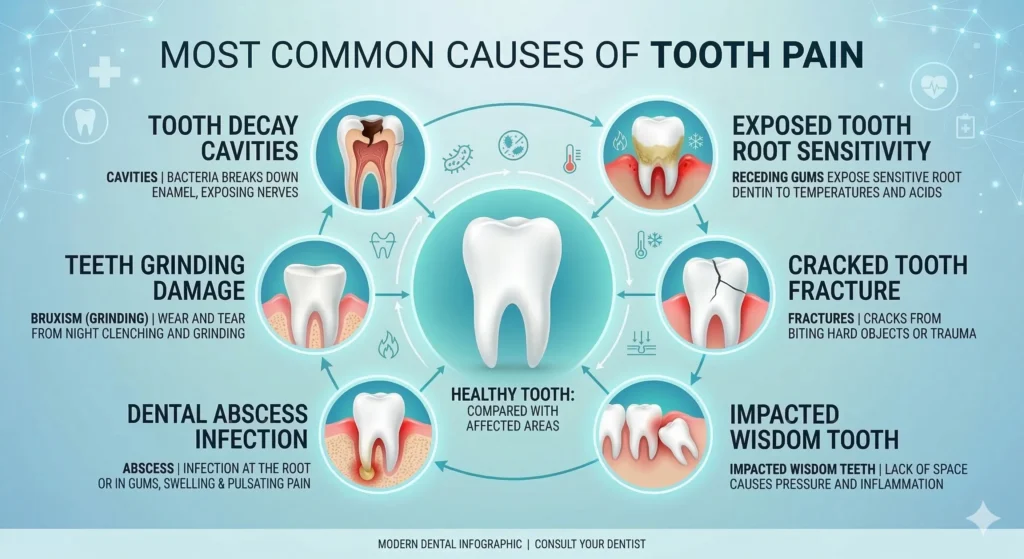
Severe tooth pain can develop due to multiple dental issues, including deep cavities, cracked teeth, gum disease, or impacted wisdom teeth. Each of these conditions affects the tooth structure differently, but they all can trigger nerve inflammation. This is why many people experiencing discomfort search for “tooth pain relief” or “how to stop tooth pain fast at home.”
Wisdom tooth pain is particularly common among young adults when there is not enough space in the jaw for proper eruption. This can lead to swelling, infection, and pressure in surrounding teeth. Other causes include sinus pressure, which can mimic dental pain, and broken tooth exposure, where nerves become highly sensitive to temperature and touch.
How to Stop Tooth Pain Fast at Home Safely
Although permanent relief requires dental treatment, there are several safe methods to temporarily reduce pain at home. Cold compresses applied to the cheek can help reduce swelling and numb the area. Saltwater rinses can also help clean the mouth and reduce bacterial irritation, making them a common recommendation for those searching “how to stop tooth pain fast.”
Over-the-counter pain relief medications may also provide temporary comfort by reducing inflammation and blocking pain signals. Natural remedies such as clove oil can offer mild numbing effects. However, these solutions are only short-term and do not address the root cause of the problem, meaning dental care is still necessary.
Wisdom Tooth Pain Relief and Common Symptoms
Wisdom tooth pain often presents as a dull or throbbing discomfort at the back of the mouth. It may worsen when chewing or during nighttime, leading to sleep disruption. Many individuals search for “wisdom tooth pain relief” or “wisdom tooth pain unbearable” when the discomfort becomes difficult to manage.
Symptoms may include swollen gums, jaw stiffness, and pain radiating towards the ear or temple. In some cases, the area may become infected, causing increased sensitivity and difficulty opening the mouth. While temporary relief methods can reduce discomfort, recurring symptoms usually indicate that the wisdom tooth may need professional evaluation or removal.
Why Tooth Pain Gets Worse at Night and How to Manage It
Tooth pain often intensifies at night due to changes in blood flow and body positioning. When lying down, increased pressure in the head can amplify nerve sensitivity, making the pain feel more severe. This is why many people report “extreme tooth pain can’t sleep” situations when symptoms flare up during bedtime.
To manage night-time pain, elevating the head with extra pillows can help reduce pressure. Applying a cold compress before sleeping may also provide temporary relief. Pain relief medication taken as directed can help manage discomfort overnight, but persistent pain should always be checked by a dentist as soon as possible.
Medical Treatments That Provide Permanent Tooth Pain Relief
The only way to truly achieve permanent relief from tooth nerve pain is through professional dental treatment. A root canal procedure removes infected pulp and seals the tooth, preserving its structure while eliminating pain. This is often the recommended solution when searching for answers to “kill tooth pain nerve in 3 seconds permanently,” as it provides lasting results.
In cases where the tooth is too damaged, extraction may be necessary. This removes the source of infection entirely, preventing further complications. Dentists may also use fillings, crowns, or antibiotics depending on the severity of the condition. These treatments ensure long-term oral health and prevent recurring pain.
When to Seek Emergency Dental Care
Severe tooth pain should never be ignored, especially if it is accompanied by swelling, fever, or difficulty swallowing. These symptoms may indicate a serious infection that requires urgent dental attention. Many people delay treatment while searching for quick fixes, but early intervention can prevent complications and reduce long-term damage.
If pain persists for more than 24 to 48 hours or becomes progressively worse, it is important to consult a dentist immediately. Emergency care ensures proper diagnosis and treatment, helping to resolve the root cause rather than temporarily masking the symptoms.
Conclusion: The Reality of Tooth Nerve Pain Relief
The phrase “kill tooth pain nerve in 3 seconds permanently” may sound appealing, but it does not reflect medical reality. Tooth nerve pain is a sign of deeper dental issues that require professional treatment. While home remedies can provide temporary comfort, they cannot permanently solve the underlying problem.
Understanding the true cause of tooth pain helps individuals make safer decisions and avoid harmful myths. With proper dental care, including root canal treatment or extraction when necessary, long-term relief is achievable. Early action not only stops pain but also protects overall oral health and prevents future complications.
You may also read: What HMRC Inspects During Payroll Checks
About the Author